
How to Turn Website Visitors into Real Customers with a Better User Experience
Turn website visitors into real customers by improving user experience, providing useful information, and making the next step clear. Businesses invest time and money in bringing visitors to their websites, but attracting people is only the first step; encouraging them to take action is equally important.
Visitors may leave because they cannot find the information they need or are unsure about a product or service. To turn website visitors into real customers, businesses need to understand visitor needs, provide useful information, and make the website easy to use.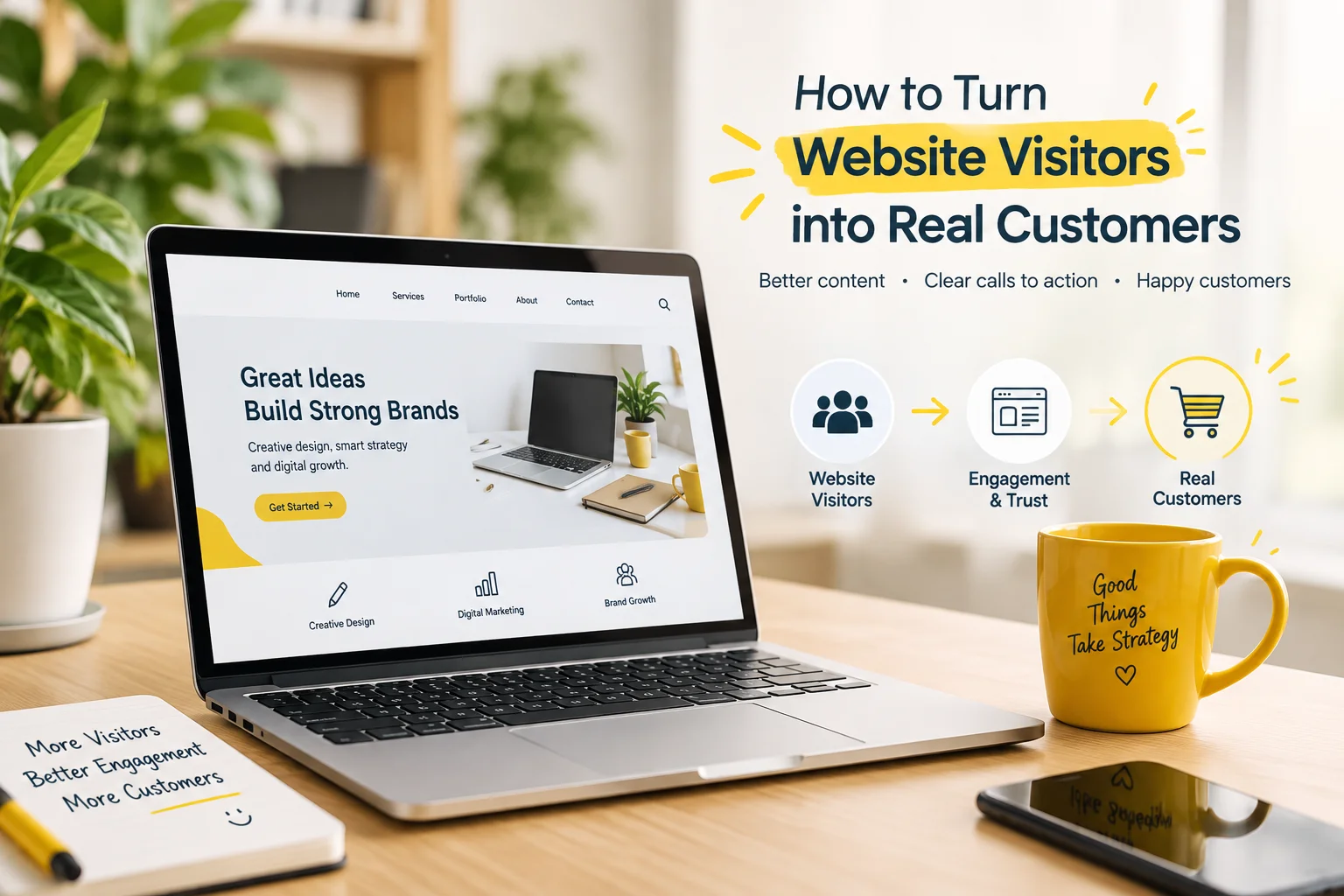
1. Why Website Traffic Does Not Always Lead to Sales
Getting visitors to a website does not always result in sales. Some websites attract plenty of attention but receive very few orders or enquiries.
For example, visitors to an online clothing store may leave because of unclear product details, unexpected delivery charges, or a complicated checkout process.
Website traffic shows how many people visit, while conversions show how many complete a desired action, such as purchasing a product or booking a service. Tracking both helps businesses understand whether their website is helping turn website visitors into real customers. By studying these results, businesses can identify problems and improve the website experience instead of focusing only on attracting more visitors.
2. Understanding What Visitors Are Looking For
Visitors come to websites with different needs. Some compare products and prices, while others are ready to buy. Providing relevant information helps them make decisions and can help turn website visitors into real customers.
For example, people visiting a mobile phone website may want to compare models, check features, or find a phone within their budget. Similarly, someone looking for digital marketing services may want to understand the available packages and benefits.
Customer questions, feedback, and website activity can help businesses understand what visitors are looking for. Answering common questions helps visitors find useful information and decide whether an offer suits them.
3. Making the Website Easy to Use
An attractive website is helpful, but visitors also need to navigate it easily. Confusing menus, unclear layouts, and difficult-to-find information can make people leave.
A clear menu, readable headings, and organised pages help visitors find products, services, and contact details quickly, making it easier to turn website visitors into real customers. These simple improvements can help turn website visitors into real customers by reducing frustration. Mobile-friendly design is also important because many people browse websites using smartphones.
Loading speed matters as well. Compressing large images and removing unnecessary features can help pages load faster. A website does not need an expensive design to serve its purpose. A simple, well-organised layout that works smoothly can provide a better experience for visitors.
4. Writing Content That Helps People Make Decisions
Website content should explain what a business offers and how it can meet customer needs. General claims are less helpful than clear, specific information.
For example, a cleaning company can explain its services, the areas it covers, and how customers can book. Product pages should include accurate descriptions, important features, prices where appropriate, and clear images.
Businesses should also answer common questions about delivery, payment methods, cancellations, and after-sales support. Honest, easy-to-understand content helps visitors evaluate their options and feel more confident about making a decision. This clarity is an important part of turning website visitors into real customers.
5. Guiding Visitors Towards the Next Step
Even interested visitors may leave a website if they are unsure how to make a purchase or contact the business. Clear calls to action can show them what to do next and help turn website visitors into real customers.
Examples include “Shop Now,” “Book a Service,” “Request a Quote,” and “Contact Us.” An online store can place an “Add to Cart” button near its product details, while a service provider can make its enquiry option easy to find.
Businesses should avoid adding too many competing buttons. Each page should guide visitors towards one main action that matches their needs. This is a practical step to turn website visitors into real customers. When the next step is clear, visitors can move more easily from exploring a website to making a purchase or sending an enquiry.
Building Trust and Encouraging Visitors to Take Action
6. Building Trust Through a Professional Website
When people visit a website for the first time, they often look for signs that the business is reliable. They may be interested in a product or service, but they might hesitate if the website looks outdated, contains incomplete information, or feels difficult to use.
A professional website helps create a positive first impression. You can explore examples of my work in the portfolio and learn more about me on the About page. Clear contact details, accurate information, and a consistent design can make a business appear more trustworthy. Businesses should also check their pages regularly to ensure that links work properly and the information remains up to date.
Trust does not develop through appearance alone. The website should provide honest details about what customers can expect. Avoiding exaggerated promises and explaining services clearly can help visitors feel more comfortable about contacting the business or placing an order.
7. Showing Customer Reviews and Testimonials
Before choosing a business, many people want to know about other customers’ experiences. Reviews and testimonials can help answer this question by showing how people feel about a product or service.
For example, a visitor considering a digital marketing agency may feel more confident after reading feedback from a client who was satisfied with its work. Similarly, an online store can display genuine reviews that explain product quality, delivery, or customer service.
Businesses should collect feedback from real customers and display it clearly on relevant pages. Where permission is available, they may include a customer’s name or an appropriate project detail to provide context. Reviews should never be invented or edited in a way that changes what the customer meant.
Negative feedback also deserves attention. Responding politely and trying to resolve genuine complaints shows that a business takes customer concerns seriously. This can help build confidence among both existing and potential customers.
8. Making Contact and Enquiries Simple
Some visitors are interested in a service but are not ready to purchase immediately. They may want to ask a question, check availability, or understand the price first. If contacting the business takes too much effort, they may decide to leave.
Businesses can make this process easier by providing visible contact details and simple enquiry forms. Visitors interested in discussing a project can use the Contact page. A form should request only the information needed to respond, such as a name, email address, and a short message. Asking for too many details at the beginning can discourage people from completing it.
Depending on the business, a phone number, email link, or WhatsApp contact option may also be helpful. These options should be easy to find on both desktop and mobile versions of the website.
After receiving an enquiry, businesses should aim to respond clearly and within a reasonable time. A helpful reply can answer the visitor’s questions and guide them towards the next step without putting unnecessary pressure on them.
9. Creating Landing Pages for Specific Audiences
A landing page is a web page designed around a particular offer, campaign, or action. Instead of sending every visitor to the homepage, businesses can direct people to a page that matches the advertisement or link they clicked.
For example, a training institute promoting a graphic design course could create a landing page with the course details, duration, learning options, and an enquiry button. Visitors arriving from that advertisement would find the information they were looking for in one place.
A useful landing page should have a clear headline, relevant information, and one main action. This focused approach can help turn website visitors into real customers. Unrelated links and unnecessary content can distract visitors from the purpose of the page.
The landing page should reflect the advertisement or link that brought visitors there. For example, if an advertisement promotes a particular service, the page should provide details about that service. Keeping the information consistent helps visitors understand the offer and decide whether it meets their needs.
10. Offering Useful Reasons to Take Action
Sometimes visitors need a little more information or motivation before making a decision. Businesses can help by offering something genuinely useful, provided it suits their audience and services.
For example, a consultant might offer a free initial discussion, while a software company could provide a trial version of its product. An online store might offer free delivery above a certain order value. Such benefits can encourage visitors to learn more about the business or consider making a purchase.
However, every offer should be explained clearly. If there are conditions, eligibility requirements, or additional charges, visitors should be able to understand them before proceeding. Hidden conditions can damage trust and discourage future purchases.
Businesses should also avoid creating unnecessary pressure through misleading countdowns or claims that an offer is about to expire when it is not. A genuine benefit, presented honestly, is more useful for building lasting customer relationships.
11. Making the Buying Process Convenient
A difficult purchasing process can discourage customers, even when they are interested in a product and trust the business. Too many steps, unclear charges, or limited payment options may cause them to abandon their purchase.
Online stores should keep the checkout process straightforward. Customers should be able to review their orders, understand the total cost, and see the available payment methods before completing a purchase. Providing delivery information early can also prevent unexpected surprises.
For service-based businesses, the process should be just as clear. Visitors should understand how to book an appointment, request a quotation, or begin working with the provider. Explaining what happens after an enquiry can reduce uncertainty.
Businesses should test the buying process regularly, including on mobile devices. Fixing broken buttons, confusing forms, and unnecessary steps can make it easier for customers to complete their intended actions.
A smooth experience does not guarantee every visitor will become a customer, but it removes avoidable difficulties and gives interested people a better chance of completing their purchase. These improvements can help turn website visitors into real customers over time.
\
Measuring Results and Building Long-Term Customer Relationships
12. Understanding Website Performance Through Analytics
Businesses need to understand how visitors interact with their websites to improve results. Website analytics help businesses understand how people use their websites, which pages attract attention, and where visitors may leave without taking action.
For example, if many visitors view a product page but only a few make a purchase, the business may need to review the product information, pricing, or buying process. Similarly, if visitors leave a service page without making enquiries, the content may not be answering their questions clearly enough.
Businesses can use Google Analytics to study website activity and identify areas that need improvement. They can also use Google Search Console to monitor how their site appears in Google Search. These tools provide useful information for improving the journey from visitor to customer. Important measurements include the number of visitors, the pages they view, the time they spend on the website, and the number of completed enquiries or purchases.
However, collecting data alone is not enough. Businesses should use the information to understand what is working and make practical changes that help turn website visitors into real customers. Regularly reviewing website performance helps them make better decisions and improve the chances of turning visitors into customers.
13. Improving Conversion Rates Over Time
A conversion happens when a visitor completes an action that a business wants them to take. This could be purchasing a product, submitting an enquiry form, booking an appointment, or subscribing to a newsletter.
The conversion rate shows the percentage of visitors who complete that action. For example, if 100 people visit a website and five make a purchase, the conversion rate is 5%.
Businesses can improve conversion rates by identifying problems that prevent visitors from taking action. These problems may include unclear information, slow-loading pages, confusing buttons, or a lack of important details.
Even small improvements can help a website perform better over time. A business might rewrite a headline, make a contact button easier to notice, or simplify an enquiry form. It can then observe whether the change improves results.
Conversion rate improvement is an ongoing process rather than a one-time task. Businesses should review performance regularly, understand visitor feedback, and make changes based on evidence instead of assumptions.
Businesses can turn website visitors into real customers by improving conversion rates and making the website easier to use.
14. Testing Different Website Elements
Sometimes businesses are unsure which website design or message will work best for their audience. Testing different versions can help them make more informed decisions.
One method is A/B testing, where two versions of a webpage element are compared to see which performs better. For example, a business might test two different headlines or compare the wording of two call-to-action buttons.
An online store could compare a button labelled “Buy Now” with one labelled “Add to Cart.” A service provider might test different headlines to find which one encourages more visitors to request a quotation.
For useful results, businesses should focus on a clear goal and avoid changing too many elements at once. They should also gather enough data before deciding which version performs better.
Not every change will improve results, and that is part of the learning process. Testing helps businesses understand their audience more accurately and gradually create a website experience that supports customer decisions.
15. Following Up with Interested Visitors
Some visitors leave a website without purchasing anything, even when they are interested in the products or services. They may need more time to compare options, discuss a decision with someone, or understand the available choices.
Businesses can sometimes reconnect with these visitors through appropriate follow-up methods. For example, someone who submits an enquiry form may appreciate receiving a helpful email that answers their questions or explains the next steps.
Online stores may also use abandoned-cart reminders when customers add products to their carts but do not complete the purchase. These reminders should be useful, relevant, and sent in accordance with the customer’s communication preferences.
Email newsletters can help businesses share product updates, useful information, special offers, and announcements with people who have chosen to subscribe. The content should provide value rather than repeatedly pressuring people to buy.
Follow-up communication should always respect privacy and consent. Businesses should avoid sending unwanted messages or contacting people too frequently. Following up with useful information can encourage visitors to return when they are ready to make a decision.
16. Providing Good Customer Support After a Purchase
Turning a website visitor into a customer is an important achievement, but the relationship should not end after the purchase. Customers may need help with delivery, product usage, booking details, or other questions after completing a transaction.
Customers should be able to reach the business easily whenever they need assistance. Clear contact information, helpful answers, and timely responses can improve the overall customer experience.
For example, an online store can provide order updates and explain its return or exchange policy. A digital marketing agency can keep clients informed about project progress and respond to questions about the services being delivered.
When problems occur, businesses should listen carefully and try to provide practical solutions. Ignoring complaints or giving unclear responses can reduce customer confidence, while professional support can help maintain a positive relationship.
Good customer service also encourages customers to share honest feedback about their experience. Businesses can use this feedback to identify weaknesses, improve their services, and provide a better experience for future customers.
17. Encouraging Repeat Purchases and Customer Loyalty
Businesses should also make it easy for returning customers to find what they need. Clear product information, helpful recommendations, and a smooth purchasing experience can encourage them to choose the business again. When customers feel that a business understands their needs and provides reliable service, they may be more likely to return in the future.
Improving the Customer Experience for Better Results
18. Understanding Why Visitors Leave a Website
Visitors may leave because they are comparing options, checking prices, or are not ready to buy. However, if many people leave at the same stage, the website may need attention.
Businesses can review customer feedback and website activity to identify possible problems. Making important details clear and being upfront about all costs can help visitors have a smoother experience.
19. Providing Information for Different Customer Needs
Different visitors need different types of information. Some want to learn about a business, while others need service details, project examples, or pricing before making a decision.
Organising information into clear pages helps visitors find suitable answers. Simple explanations, useful examples, and frequently asked questions can make the website easier to understand and use.
20. Connecting Social Media with the Website
Social media can introduce businesses to new audiences and direct interested people to their websites. However, the information visitors find after clicking a link should match what was promoted.
For example, a bakery can share new products on Instagram and link to its menu or ordering page. Relevant content and suitable links help visitors move from discovering a business to exploring its offerings.
21. Staying Connected Through Email Marketing
Email marketing allows businesses to share updates, useful information, and relevant offers with people who have subscribed to their messages. It can encourage visitors to return to a website when they need something.
Emails should be clear, relevant, and easy to read. Businesses should respect subscribers’ preferences and provide an option to unsubscribe rather than sending frequent, unwanted promotions.
22. Making the Customer Experience More Personal
Customers appreciate recommendations and information that suit their needs. Businesses can provide a more personal experience by answering individual questions and suggesting relevant products or services.
Personalisation should remain useful and respectful. Collecting only necessary information and protecting customer privacy helps businesses offer relevant assistance without making visitors feel uncomfortable.
23. Keeping Website Information Accurate and Up to Date
A website should reflect the business as it is today. Outdated prices, expired offers, and incorrect contact details can confuse visitors and affect their decisions.
Businesses should regularly check important pages, links, enquiry forms, and mobile functionality. Small updates can keep information accurate and help the website continue supporting the business as it grows.
24. Building Trust Through Customer Reviews
Customer reviews and testimonials can help visitors feel more confident about a business. When people see genuine feedback from previous customers, they can better understand the quality of products or services offered. Businesses can display relevant reviews on their websites and encourage satisfied customers to share their experiences.
It is important to present feedback honestly and avoid using misleading claims. Responding politely to both positive and negative reviews also shows that a business values customer opinions. Building trust through genuine feedback can reduce doubts, support better decision-making, and encourage more visitors to become customers.
If you want to turn website visitors into real customers, focus on creating helpful content, improving website usability, and adding clear calls to action. These simple strategies can help turn more visitors into customers and support long-term business growth.
Conclusion
Learning how to turn website visitors into real customers involves more than attracting traffic. Businesses need to understand what people want, provide useful information, and make it easy to take the next step.
By reviewing website performance, improving the customer experience, and offering reliable support, businesses can build stronger relationships with their audiences and steadily improve their ability to turn website visitors into real customers. Regular improvements can help turn more interested visitors into customers and support long-term business growth.
Learning how to turn website visitors into real customers requires useful content, a smooth website experience, and clear calls to action.
Hi, this is a comment.
To get started with moderating, editing, and deleting comments, please visit the Comments screen in the dashboard.
Commenter avatars come from Gravatar.